
Do Tagless Shirts Help Sensory Issues? A Practical Guide
Table of Contents
- Do Tagless Shirts Help Sensory Issues? The Direct Answer
- Common Sensory Issues With Clothing and What Triggers Them
- Tagless Shirts for Sensitive Skin: What They Fix and What They Don't
- The Best Fabrics for Sensory-Friendly Clothing
- Seamless Clothing for Sensory Sensitivities: Seams, Waistbands, and Fit
- How to Choose and Test a Tagless Shirt: A Step-by-Step Process
- When Discomfort Continues: Causes Beyond the Clothing Tag
- Frequently Asked Questions
Last Updated: October 21, 2026
Do Tagless Shirts Help Sensory Issues? The Direct Answer
Yes, tagless shirts help many people with sensory issues, but they solve one specific problem.
But a tagless shirt is not automatically a comfortable shirt. A printed label can still feel rough, and rough seams, stiff fabric, and a tight collar can bother you as much as a tag did.
Below, we'll show you how to tell whether tagless will help, which fabrics and seams matter, and how to test a shirt before committing to a drawer of them.
What Tagless Really Means on a Label
Tagless means the shirt has no sewn-in fabric label at the neck. Instead, the size and care details are printed directly onto the inside of the fabric, or left off entirely.
But "tagless" is a broad word. Some printed labels use thick ink that feels raised and rough; others are nearly invisible to the touch. Quality varies, so your fingertips tell you more than the package does.
Common Sensory Issues With Clothing and What Triggers Them
Clothing discomfort usually comes from a short list of triggers, not the shirt as a whole. People with sensory sensitivity notice tactile input others tune out: a seam, a label, a waistband, heat-trapping fabric.
The most common triggers we hear about:
- Tags at the neck or side seam that scratch and itch
- Rough seams under the arms or across the shoulders
- Tight waistbands and cuffs that press on the skin
For people with autism, ADHD, or general sensory processing differences, these small irritations add up. One scratchy label can pull focus all day.
Why a Clothing Tag Can Flip the Switch to Sensory Overload
A tag is small, but it never stops touching you. Every time you move your neck or shoulders, it rubs the same spot again, and that repeated input wears down your ability to ignore it. For someone with sensory sensitivities, that steady drip can build into sensory overload, distraction, restlessness, a shirt pulled at all day. Removing the tag cuts off that input at the source.
Tagless Shirts for Sensitive Skin: What They Fix and What They Don't
Tagless shirts for sensitive skin fix the label problem, for many people, the difference between a shirt they wear and one they avoid. But construction matters as much as the absence of a sewn-in tag.
The Three Main Tagless Constructions (and Their Trade-offs)
Not all tagless shirts are built the same way. Most fall into one of three categories, and each has a different feel against the skin:
| Construction Type | How It Works | What to Watch For |
|---|---|---|
| Printed label (heat-transferred) | Size and care info printed directly onto the inside neckline fabric | Thick or rubbery ink can feel raised and rough; cheaper prints may crack or peel after washing and leave a scratchy edge |
| Printed label (flat ink) | Thin, flat ink bonded into the fabric surface | Usually the smoothest option; still worth feeling in person because ink quality varies widely |
| Tag cut out or omitted entirely | No label at all, or the sewn-in tag removed at the factory | If cut rather than omitted, a stiff remnant edge can remain in the seam and rub |
Heat-transferred labels with thick ink often bother sensitive wearers almost as much as a sewn-in tag did. Flat-printed labels tend to disappear against the skin. And a shirt sold as tagless because the tag was cut out can still have a rough seam edge where the label sat.
When Tagless Is Likely to Help, and When It Isn't
Tagless is most likely to help when the wearer can point to the neck label as the specific trigger: the shirt feels fine everywhere except that one spot, and discomfort starts or intensifies when the label rubs.
Tagless is less likely to be the whole answer when:
- The discomfort is spread across the shoulders, underarms, or sides (seams are the more likely culprit)
- The shirt feels hot, sweaty, or clingy (fabric and fit are the more likely culprits)
- The wearer reacts to the collar edge itself, not the label
If a tagless shirt still bothers the wearer, the tag probably wasn't the main trigger, and buying more tagless shirts won't fix it. Next, look at seams, fabric, and fit in that order.
What Tagless Fixes and What It Doesn't
Here's the honest split:
| What Tagless Fixes | What Tagless Doesn't Fix |
|---|---|
| Neck label scratching | Rough seams |
| Side-seam tag irritation | Stiff or scratchy fabric |
| Constant rubbing at the collar | Tight fit or pressure points |
| Label ink bleeding or fraying (if the label is omitted entirely) | Heat trapped by synthetic blends |
| Raised, rubbery printed labels (if you choose flat-ink prints) | Collar edge sensitivity |
The takeaway: tagless is one fix, not the whole fix. Pair it with soft fabric and smooth seams and you get a shirt that works. If tagless alone doesn't solve the problem, the trigger is somewhere other than the label.
The Best Fabrics for Sensory-Friendly Clothing
The best fabrics for sensory-friendly clothing are soft, breathable, and smooth against the skin. Fabric texture matters as much as the label, often more.
What to look for:
Big Men's Crew Neck Bamboo Viscose T-Shirts - Oversized for a relaxed →
- Soft, smooth finishes that don't scratch or pill
- Breathable fabric that lets heat escape
- Natural or plant-based fibers like bamboo viscose and cotton
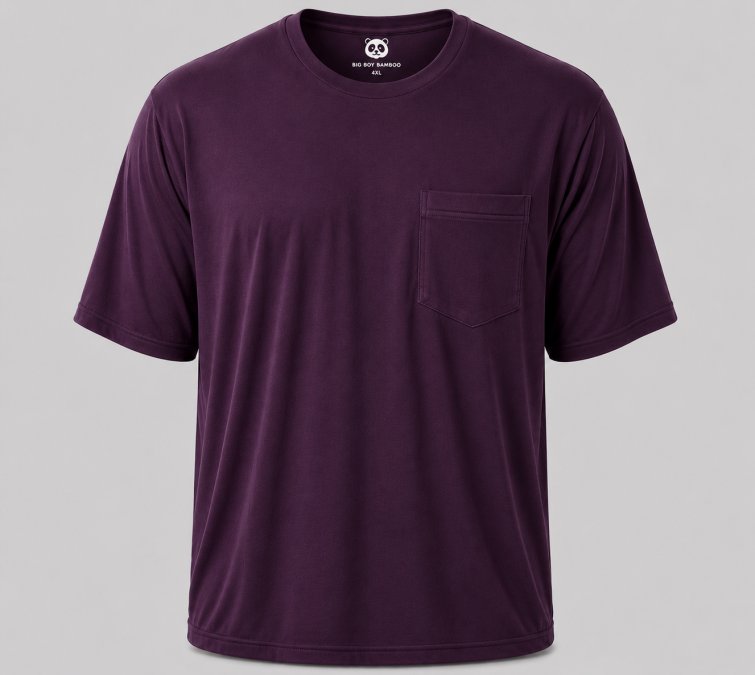
Bamboo viscose is a strong choice: silky, cool, drapes without clinging, and breathes well. Our Big Men's Crew Neck Bamboo Viscose T-Shirts are cut from this fabric, with no scratchy tag at the neck.

Seamless Clothing for Sensory Sensitivities: Seams, Waistbands, and Fit
Seamless clothing for sensory sensitivities targets the second-biggest trigger: seams and pressure. Flat seams lie smooth against the skin, with no raised ridge to rub.
What to check:
- Flat seams at the shoulders and underarms
- No bulky side seams pressing into your ribs
- A relaxed fit through the chest and midsection
Fit matters as much as construction. A tight shirt creates pressure points everywhere it touches; a relaxed cut spreads contact evenly and lets fabric move with you. For bigger frames, this is where most shirts fail, standard tees cling through the midsection and pull at the shoulders.
How to Choose and Test a Tagless Shirt: A Step-by-Step Process
Choosing a tagless shirt works best as a short, repeatable test rather than a one-time purchase. The goal is to find out whether the tag was actually the trigger and build a drawer of shirts that have passed.
Step 1: Identify the Trigger Before You Buy
Before you shop, narrow down what actually bothers the wearer. Have them wear a shirt they own and describe where discomfort starts. "The back of my neck" or "right at the collar" points to the label; "under my arms" or "around my waist" points to seams or fit. People often assume the tag is the problem because it's the most visible culprit, when the real trigger is a seam or heat-trapping fabric.
Step 2: Check the Construction in Person
When you have the shirt in hand, run through this short check:
- Feel the inside neckline. Flat, smooth ink is best. Raised, rubbery, or tacky prints are a warning sign.
- Run a finger along the shoulder and side seams. Flat seams lie smooth; bulky seams create a ridge to rub against.
- Squeeze and stretch the fabric. It should feel cool and smooth, not stiff or scratchy.
- Check the collar edge. A tight or stiff collar can bother the wearer even with no label at all.
- Look at the fit through the chest and shoulders. A relaxed cut spreads contact evenly; a tight cut creates pressure points.
Step 3: Test It Over Time, Not Just in the Store
A shirt that feels fine for thirty seconds can become irritating after an hour. Test in stages:
- Wear it for one hour at home first. Note any spots that start to bother the wearer.
- Wash it once, then re-test. Some fabrics soften after the first wash; others stiffen or pill.
- Try a half-day, then a full day. Discomfort that only appears after several hours points to seams, fit, or heat rather than the label.
- Keep what passes, return what doesn't. Build the drawer from proven shirts only.
Step 4: Let the Wearer Lead
For children and adults alike, the person wearing the shirt is the best judge. Offer options rather than prescribing one solution: let them feel the neckline, choose between two candidate shirts, and say which feels better. A shirt the wearer picked and tested is far more likely to stay in rotation. Respect a "no" even when the shirt seems fine to someone else, sensory preferences are individual.
Step 5: If You Still Need to Remove a Tag
If you're stuck with a sewn-in tag, remove it carefully. Use small, sharp scissors and cut close to the stitching, not through the fabric, better still, a seam ripper to lift the stitches. Cut slowly and check the inside as you go; one slip can nick a hole in the neckline. If the tag sits in a seam, trim rather than pull.
When Discomfort Continues: Causes Beyond the Clothing Tag
Sometimes you remove the tag and the discomfort stays. That's a signal to look beyond the label.
Other common causes:
- Seams and fit creating pressure you hadn't noticed
- Fabric and heat causing sweat and chafing
- Skin conditions like eczema or dermatitis
If discomfort is severe, persistent, or comes with a rash, see a doctor. Clothing changes help, but they aren't a diagnosis.
For most people, though, the fix is a process of elimination.
Finding a shirt that doesn't fight your skin shouldn't be a daily battle. Every order ships plastic-free, and it's backed by our 100% satisfaction guarantee.
Frequently Asked Questions
Do tagless shirts help with sensory issues?
They often do, but not always. Tagless shirts remove the scratchy label that rubs against the neck, which is one of the most common clothing complaints for people with tactile sensitivity. If the tag is your main trigger, switching to tagless shirts can make a real difference. If seams, fabric texture, or fit are the bigger problem, a tagless shirt alone won't solve it. Treat tagless construction as one part of a sensory-friendly wardrobe, not a complete fix.
Are tagless shirts better for people with autism?
Many autistic people report that clothing tags cause itching, irritation, and distraction that pulls focus all day. Removing that trigger can support self-regulation and comfort. That said, sensory preferences are individual. Some people are more bothered by seams or fabric texture than by tags. The practical approach is to test one variable at a time: try a tagless shirt, note whether discomfort drops, and adjust from there rather than assuming tagless is automatically better for everyone.
What shirt fabrics are best for sensitive skin?
Soft, breathable fabrics tend to work best: bamboo viscose, cotton, and modal are common choices because they feel smooth against skin and let air through. Rough wool, stiff synthetics, and scratchy blends are frequent triggers. Fabric weight matters too, since heavy material can feel restrictive. Look for a smooth hand feel, breathable construction, and a cut that doesn't cling. Bamboo viscose in particular is known for a silky-soft texture that stays comfortable through a full day of wear.
How can I make a shirt more comfortable if it still feels irritating?
Start with the tag: cut it out close to the seam, or better, choose a shirt with a printed label instead. Then check seams and fit. Flat seams and a relaxed cut reduce friction and pressure. Wash new shirts before wearing to soften the fabric. If a shirt still irritates, note whether the problem is the neckline, the shoulders, or the fabric itself, because that tells you what to look for next time. Testing one change at a time makes it easier to identify what actually helps.
