
Durable Clothes Hangers for Heavy Shirts
Table of Contents
- Why Standard Hangers Fail Heavy Shirts
- Preventing Hanger Bumps on Shirts: What Actually Works
- Best Hangers for Big and Tall Clothing: What to Look For
- Adjustable Width Clothes Hangers: The 15 to 23 Inch Difference
- The Swivel Hook and Vertical Stacking Advantage
- Fabric Compatibility and Long-Term Stress Testing
- Protecting Premium Clothing and Closet Organization
- Frequently Asked Questions
Last Updated: October 4, 2026
Why Standard Hangers Fail Heavy Shirts
Most people blame the shirt when a shoulder sags or a neckline stretches. The hanger is usually the real problem. Durable clothes hangers for heavy shirts solve a structural mismatch: a narrow frame carrying more fabric than it can support, which is why durable clothes hangers matter here.

Customers who wear 2XL through 8XL often report the same thing: a favorite tee comes off the hanger looking misshapen before it's even been worn. The hanger is too small, too flimsy, or both.
Below, we break down why that happens, what shoulder marks are, and how to choose a hanger that protects your clothes.
The Weight Distribution Problem
A heavier garment places more material across the hanger's arms, and that weight has to go somewhere. On a standard wire or thin plastic hanger, the load concentrates at two narrow points near the shoulders, so the fabric stretches downward and the hanger can bow under the strain.
Wider hangers spread that weight across a longer span, reducing pressure at any single point, the same principle as a wide snowshoe versus a narrow heel.
Width Matters More Than You Think
A hanger can be strong and still wrong for your shirt. Strength keeps the hanger from snapping; width keeps the garment from distorting.
Standard hangers measure around 15 inches across, fine for a medium shirt, not for a 3XL tee with broad shoulders and extra fabric. When the hanger is narrower than the shoulder seam, the fabric folds over the ends and creases.
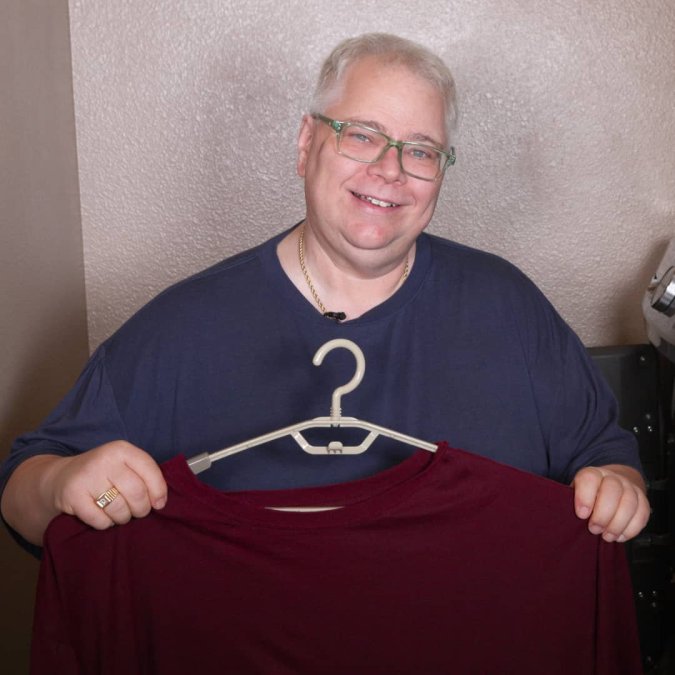
Eco-Friendly Fabric for Men's Shirts: Bamboo vs Cotton
Preventing Hanger Bumps on Shirts: What Actually Works
Preventing hanger bumps on shirts comes down to one thing: matching the hanger's width to the garment's shoulder span. Material, hook style and coating are secondary to that fit.
What Are Hanger Bumps?
Hanger bumps, also called shoulder bumps or hanger marks, are the raised, pointed distortions left in a garment's shoulders after it hangs on a hanger that's too narrow or too rigid. The fabric drapes over a small contact point and takes on that shape, sometimes permanently.
Why They Show Up on T-Shirts
A protruding shoulder mark is far more obvious on a T-shirt than on a jacket. Jackets have structure, padding and lapels that hide minor distortion; a knit tee has none of that, so any bump reads as a flaw the moment you put the shirt on.
Best Hangers for Big and Tall Clothing: What to Look For
The best hangers for big and tall clothing combine extra width, real load-bearing strength, and a surface that grips without snagging.
Here's what to check before you buy:
Feature |
Why It Matters |
What to Avoid |
|---|---|---|
Width |
Prevents shoulder marks on broad frames |
Anything under 17 inches |
Weight capacity |
Holds heavy knits without bending |
Thin wire or flexing plastic |
Adjustability |
Fits different garment sizes |
Fixed-width only |
Hook type |
Swivel aids closet organization |
Fixed, non-rotating hooks |
Coating |
Grips fabric without snagging |
Bare metal edges |
Adjustable Width Clothes Hangers: The 15 to 23 Inch Difference
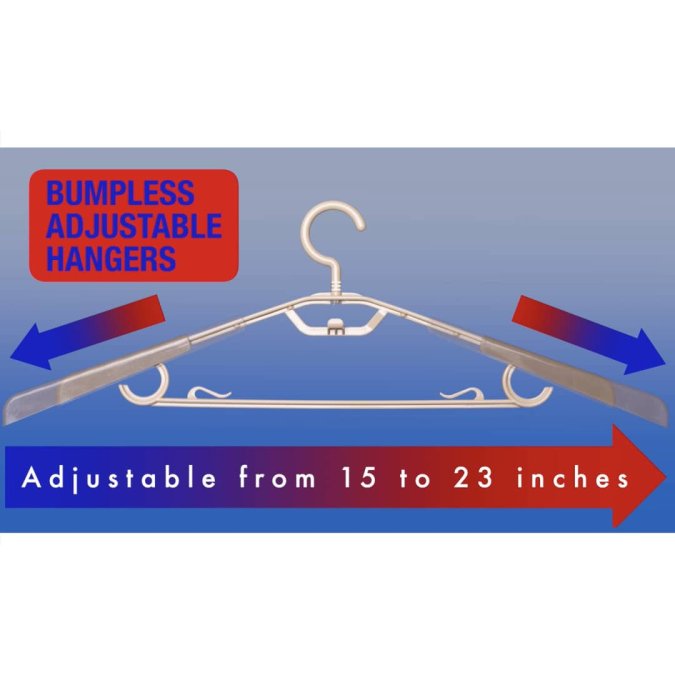
Adjustable width clothes hangers let you change the hanger's span to match the garment instead of forcing every shirt onto the same frame. Our Individual Adjustable Heavy Duty Plastic Extra-Wide Bumpless Clothes Hangers expand from a standard 15 inches to an extra-wide 23 inches.
That range covers the full spread of Big & Tall sizing: a 2XL tee might sit at 18 inches, while a heavy 6XL sweater or bulky coat may need the full 23. Slide the arms to the length you need, then lay the shirt on smoothly.
This is the biggest differentiator between a hanger that works and one that just survives: fixed-width hangers force a compromise; adjustable hangers remove it.
Big Boy Bamboo Size and Fit Charts →
The Swivel Hook and Vertical Stacking Advantage
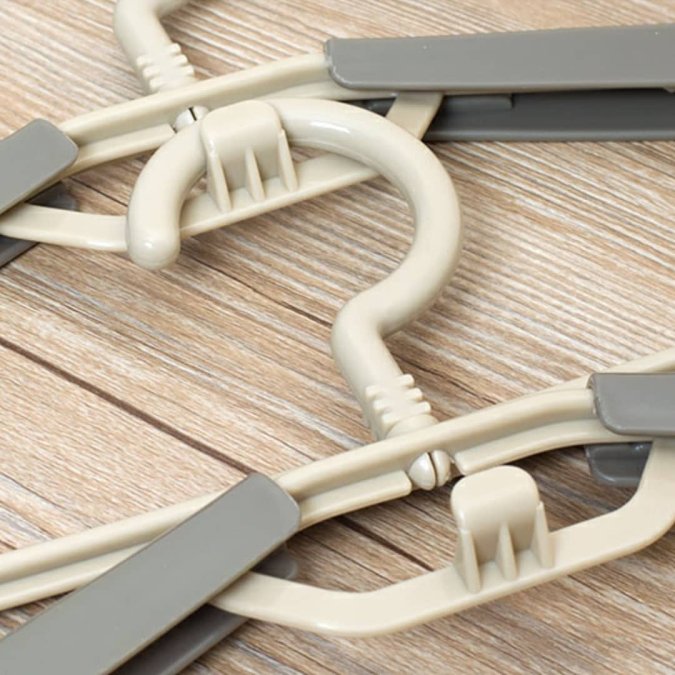
A swivel hook lets the hanger rotate a full turn, so you can face any garment forward without lifting it off the rod. On a fixed hook, you have to pull the whole hanger off, flip it and re-hang it, exactly when a heavy shirt slips off and hits the floor. Keeping your heavy shirts properly oriented while they hang helps prevent neckline deformation by keeping the weight evenly distributed across the shoulders.
The stacking hook is especially useful in tight spaces. Our hangers include an innovative hook design that lets you hang multiple hangers vertically, 8 or more in a single chain, trading horizontal closet space for vertical space.
The hook has a secondary notch below the main curve: hang the first hanger on the rod, then drop the second hanger's hook through that notch so it hangs below the first. Repeat down the chain. The load compounds, which is why the hook and body must be rigid, a chain of eight heavy shirts puts roughly eight times the weight on the top hook.
For anyone sharing a closet or working with a shallow rail, that's the difference between a usable closet and a jammed one, and it keeps a full outfit grouped on one hook instead of scattered across the rail.
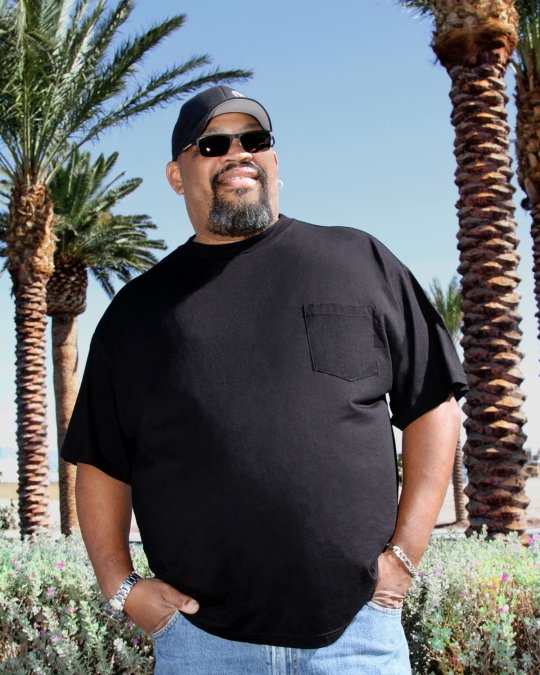
Fabric Compatibility and Long-Term Stress Testing
In practice, the fabric can determine whether a hanger helps or hurts, because different fibers react differently under the same load.
How Different Fabrics React to a Hanger
- Heavy cotton knits (the classic Big & Tall tee): Cotton has little memory, so once it stretches over a narrow hanger, it stays stretched. The failure mode is a permanent shoulder crease and a sagging neckline. Cotton needs width above all else, because the fabric has no structure to hide a bad hanger line.
- Wool and wool blends: Wool fibers have scales that catch on rough surfaces. A bare metal or sharp-edged hanger abrades those scales where the shoulder rests, which shows up later as pilling and a fuzzy patch on the shoulder. Wool also absorbs moisture and relaxes under its own weight, so a sweater left on a too-narrow hanger will slowly stretch at the shoulders. A smooth, wide surface distributes that load.
- Synthetic blends and performance fabrics: These are slick and heavy for their thickness. The problem isn't stretching; it's sliding. A smooth hanger lets a synthetic tee slide off the shoulder and pool at the bottom of the hanger. A textured or velvet-coated surface grips without snagging, which is why coated hangers tend to work better for synthetics than bare plastic or metal.
- Linen and lighter wovens: These crease easily and have almost no stretch. A hanger that's too wide can actually be worse than one that's slightly narrow, because the fabric folds over the ends and sets a hard crease. Match the hanger width to the shoulder seam rather than going as wide as possible.
What Long-Term Stress Testing Actually Reveals
The practical test is simple: after a full season holding your heaviest garments, check whether the hanger still sits level on the rod, whether the arms are straight, and whether your shirts' shoulders still lie flat. A hanger that bends, sags or leaves marks has failed, no matter what the packaging claimed.
Protecting Premium Clothing and Closet Organization
Good hangers do two jobs: they protect the garment, and they make the closet work. Both matter more once you're buying quality clothing in extended sizes, where replacements are harder to find.
A wider hanger preserves the shoulder line, which extends the life of the shirt. A stackable, swiveling hanger keeps the closet organized so you actually wear what you own. And because our hangers are built for Big & Tall garments specifically, they pair naturally with the bamboo viscose tees we make for men sized 2XL to 8XL and 1XLT to 4XLT.
If you're already careful about how you wash and store your clothes, the hanger is the last piece most people overlook.
Heavy shirts deserve hangers built for their weight and width, not scaled-up versions of a standard frame. If your closet is full of shoulder marks and sagging knits, the fix is a wider, stronger, adjustable hanger that matches the garment. Our adjustable extra-wide bumpless hangers expand from 15 to 23 inches, stack vertically to save space, and use a swivel hook for easy access. Pair them with our ultra-soft bamboo viscose Big & Tall tees, backed by our 100% satisfaction guarantee, and give your wardrobe the support it's been missing. Get started with Big Boy Bamboo and hang your clothes the way they were meant to hang.
Frequently Asked Questions
What are the best hangers for heavy clothes?
The best hangers for heavy clothes are extra-wide, heavy-duty options with reinforced construction that distribute weight across a broader surface. Look for hangers that expand to at least 20 inches wide, have a weight capacity suited to your garments, and feature non-slip surfaces. The Big Boy Bamboo Adjustable Heavy Duty Extra-Wide Bumpless Clothes Hangers expand from 15 to 23 inches, providing enough width to support heavy shirts, coats, and jackets without causing shoulder distortion or sagging.
How do I prevent shoulder bumps on my T-shirts?
Preventing hanger bumps on shirts starts with using hangers wide enough to match your shirt's shoulder width. Standard hangers are typically 15 inches wide, but Big & Tall shirts often need 20 inches or more. Adjustable width clothes hangers let you extend the arms to fit your garment precisely. The Big Boy Bamboo hangers expand up to 23 inches and feature a bumpless design that eliminates the pressure points where hanger marks form. Smoothly slide shirts onto the hanger rather than stretching them over the ends.
Are adjustable hangers better for big and tall clothing?
Yes. Best hangers for big and tall clothing need to accommodate broader shoulders, longer sleeves, and more fabric than standard garments. Adjustable width clothes hangers let you match the hanger to each garment's actual dimensions. A fixed hanger that's too narrow forces fabric to bunch at the shoulders, creating bumps and stress on seams. The Big Boy Bamboo adjustable hangers extend from 15 to 23 inches, so you can widen them for a 4XL shirt and narrow them for a standard jacket.
What is the strongest hanger for heavy garments?
The strongest hangers use reinforced plastic or heavy-duty materials with a wide shoulder profile to distribute weight evenly. Look for hangers specifically rated for heavy garments like coats and jackets. The Big Boy Bamboo Adjustable Heavy Duty Extra-Wide Bumpless Clothes Hangers are designed for Big & Tall T-shirts, coats, jackets, and button-down shirts. Their extra-wide design and durable construction handle the weight of larger garments without bending or sagging over time.
