
Eco Friendly Fabric for Men's Shirts: Combining Organic Bamboo and Organic Cotton
Table of Contents
- What Is Bamboo Viscose Fabric?
- The Benefits of Bamboo Viscose Fabric for Everyday Wear
- Organic Cotton vs Bamboo Viscose for Shirts: A Detailed Comparison
- Environmental Impact and Sustainability of Eco-Friendly Fabric
- Why Bamboo Viscose and Organic Cotton Are Combined in the Best Men's Shirts
- Sustainable Fabrics for Big and Tall Men: Finding the Right Fit
- Frequently Asked Questions
Last Updated: September 30, 2026
What Is Bamboo Viscose Fabric?
Bamboo viscose is a regenerated cellulose fiber made by breaking bamboo stalks into pulp, then extruding that pulp into soft, spinnable yarn. The result drapes like silk, breathes like linen, and absorbs moisture faster than cotton, which is why it's a go-to eco friendly fabric for men's shirts.
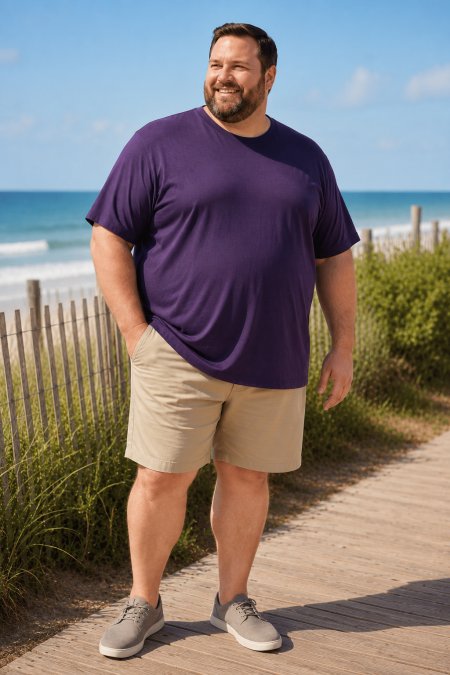
Bamboo grows fast, needs little replanting, and produces fiber with a naturally smooth surface. That smoothness is why bamboo shirts feel cooler on a hot day than a standard cotton tee.
This guide breaks down how bamboo viscose compares to organic cotton, where each fiber wins, and how to tell a genuinely sustainable shirt from a greenwashed one.
Both fibers are plant-based, but they behave very differently in a shirt, and the manufacturing process behind each shapes its environmental footprint.
The Benefits of Bamboo Viscose Fabric for Everyday Wear
The benefits of bamboo viscose fabric come down to three things: softness, breathability, and moisture management.
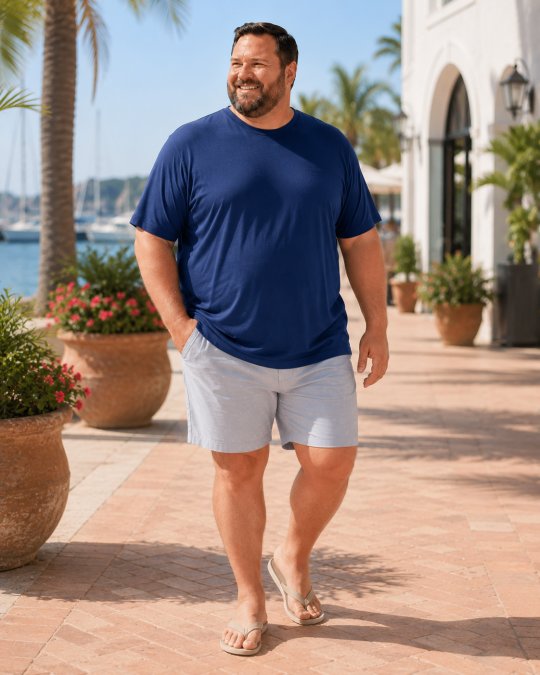
Breathability is where bamboo viscose pulls ahead. The fiber structure lets air move through the fabric, so heat escapes instead of building up against your back, noticeable within the first hour if you run warm.
Moisture-wicking is the second advantage. Bamboo viscose pulls sweat away from skin and spreads it across the fabric surface, where it evaporates faster, keeping you drier through a commute or a workday.
Odor resistance rounds out the list. Bamboo fiber has natural antibacterial properties that slow the bacteria behind sweat odor, so the shirt stays fresher between washes.
Bamboo viscose also feels cooler to the touch than cotton and doesn't stiffen the way some treated fabrics do.
Organic Cotton vs Bamboo Viscose for Shirts: A Detailed Comparison
Organic cotton and bamboo viscose differ most in how they feel, handle moisture, and are produced. Organic cotton is grown without synthetic pesticides or fertilizers; bamboo viscose is a regenerated cellulose fiber spun from bamboo pulp.
Both are natural fibers. Both are biodegradable. They part ways on performance.
|
Feature |
Bamboo Viscose |
Organic Cotton |
|---|---|---|
|
Softness |
Silky, cool to the touch |
Soft, slightly drier hand |
|
Moisture-wicking |
Fast absorption and drying |
Absorbs well, dries slower |
|
Breathability |
High, air moves easily |
Good, denser weave |
|
|
|
|
|
Durability |
Good with proper washing |
Strong, resists abrasion well |
|
Farming input |
Fast-growing, low water demand |
Pesticide-free, high water demand |
|
End of life |
Biodegradable |
Biodegradable |
Cotton's strength is durability; it holds up to repeated washing and heavy wear. Where it falls short is moisture management: cotton holds water, so a soaked shirt stays soaked.
Bamboo viscose dries faster and stays softer against skin, but it needs gentler washing; high heat and harsh detergent break down the fiber over time.
Neither fiber wins outright: organic cotton is the tougher workhorse, bamboo viscose the more comfortable everyday fabric. That's exactly why the best shirts use both.
Environmental Impact and Sustainability of Eco-Friendly Fabric
Sustainability in fabric comes down to four things: water use, chemical processing, land demand, and end of life. Bamboo's edge starts in the field, it's a grass, not a tree, and it regenerates from the same root system after harvest, so it doesn't need replanting the way cotton does. It also grows fast enough to cut on a short cycle and thrives on marginal land with far less irrigation than conventional cotton.
Cotton's problem is resource intensity. Conventional cotton is a thirsty crop reliant on synthetic fertilizers and pesticides. Organic cotton removes the synthetic chemicals, a genuine improvement, but water demand stays high, certification doesn't change how much rain or irrigation the plant needs.
Textile Exchange's Materials Market Report tracks how these fibers are produced and certified globally, and it's a useful reference when you want to verify a sustainability claim rather than take it at face value. Certification bodies like FSC (for the bamboo pulp source) and OEKO-TEX (for residual chemical testing on the finished fabric) are the two signals worth looking for on a label.
Big Men's Crew Neck Bamboo Viscose →
End-of-life is where plant-based fibers separate from synthetics. Both bamboo viscose and organic cotton are biodegradable, so a worn-out shirt breaks down rather than persisting in a landfill like polyester. That beats the recycled-plastic fabrics some brands market as sustainable; those shed microplastics in the wash and never fully degrade.
Garment longevity is the other half of the equation. A shirt you wear for years has a lower carbon footprint than one you replace every season, regardless of fiber. That's the argument for a blend: a 70% organic bamboo viscose and 30% organic cotton shirt holds its shape through repeated washing, so you keep wearing it.
Why Bamboo Viscose and Organic Cotton Are Combined in the Best Men's Shirts
Combining bamboo viscose with organic cotton produces a fabric softer than either fiber alone. Pure bamboo viscose is comfortable but loses shape, while pure cotton is durable but drier and heavier against the skin.
Blend the two and you get the best of both: bamboo viscose delivers softness, breathability, and moisture-wicking, while organic cotton adds structure, fiber strength, and wash durability.
At Big Boy Bamboo, we make our shirts from a blend of 70% organic bamboo viscose and 30% organic cotton. That ratio is deliberate. The majority bamboo content keeps the fabric silky and cool, while the cotton portion gives the shirt enough body to drape properly instead of clinging.
Moisture management improves in a blend, too: bamboo moves sweat away from skin quickly, and cotton helps the fabric recover its shape after a long day.
How the Blend Behaves in an Actual Shirt
Fabric weight matters as much as weave. A lightweight knit (roughly 4-5 oz per square yard) suits summer and skin contact; a midweight (6-7 oz) holds up year-round and layers without clinging. Heavier than that and you lose the breathability advantage that made you choose bamboo. Big Boy Bamboo shirts are made with 180-gram fabric.
Construction Details That Make or Break the Blend
Construction matters as much as fiber. A tag-free neckline (like ours) removes the scratch that bothers sensitive skin, and a proper cut keeps fabric where it belongs.
Sustainable Fabrics for Big and Tall Men: Finding the Right Fit
Finding sustainable fabrics for big and tall men can be a challenge, since extended sizing isn't always available in eco-friendly apparel.
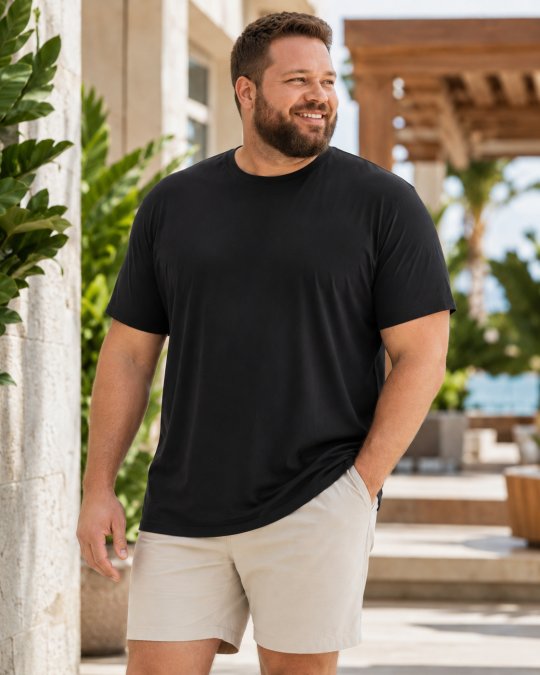
A shirt made from organic cotton or bamboo viscose does you no good if the shoulders pull, the sleeves run short, or the hem rides up. Fit and fabric have to work together.
Also: Moisture Wicking Shirts for Big Guys: 2026 Guide
Big Boy Bamboo builds shirts specifically for larger frames rather than scaling up a standard pattern. Our crew neck, V-neck, and pocket tees come in sizes 2XL through 8XL, and our tall crew neck shirts run 1XLT through 4XLT with 4 to 6 inches of extra length so the hem stays put.

A few practical checks before you order:
- Compare your best-fitting shirt against the brand's garment measurements, not just the size label
- Confirm the blend ratio, ideally 70% bamboo viscose and 30% organic cotton
- Check for a tag-free neckline if you have skin sensitivities
- Look for tall sizing if you're over 6'2" and regular tees run short
- Verify the return policy before committing to a multi-shirt order
- The cut matters as much as the fiber: extra room through the chest, shoulders, and midsection keeps a bamboo shirt draping naturally instead of clinging.
- Our guide to fabric care from the American Cleaning Institute is worth a read if you want your shirts to last, but the short version is simple: cold water, gentle cycle, low heat.
Frequently Asked Questions
What are the downsides of bamboo viscose fabric?
Bamboo viscose requires chemical processing to turn bamboo cellulose into soft fiber, which is a valid concern if you are looking for a fully natural fabric. However, when blended with organic cotton, as in Big Boy Bamboo shirts, the result is a durable, breathable fabric that holds up well with proper care.
Is organic cotton or bamboo viscose better for shirts?
Both have strengths. Organic cotton is durable, breathable, and pesticide-free. Bamboo viscose is softer and moisture-wicking. For shirts, a blend of 70% organic bamboo viscose and 30% organic cotton combines the best of both: the softness and temperature regulation of bamboo with the durability and structure of cotton. This is why Big Boy Bamboo uses this specific blend for their big and tall t-shirts.
Why is a bamboo and cotton blend better than 100% cotton?
A bamboo and cotton blend offers superior softness and better moisture management compared to 100% cotton. The bamboo viscose component makes the fabric feel silky against the skin while the organic cotton adds strength and shape retention. For big and tall men, this blend also provides a more flattering drape and less clinging through the midsection.
Is bamboo viscose environmentally friendly?
Bamboo itself grows rapidly without pesticides and requires little water. The viscose process does involve chemicals but are removed in our closed-loop system. When blended with organic cotton, the environmental footprint is lower than conventional cotton or synthetic fabrics. Look for brands that prioritize sustainable sourcing and plastic-free shipping to reduce waste further.
