
Why Bamboo Fabric Is Better for Sensitive Skin
Table of Contents
- What Does "Sensitive Skin" Actually Mean?
- Why the Fabric Touching Your Skin Matters
- Softness and Reduced Mechanical Irritation
- What Bamboo Viscose Actually Is
- Why Bamboo Fabric for Sensitive Skin Works: Breathability and Heat Management
- Is Bamboo Clothing Good for Sweating?
- Why This Matters Especially for Big & Tall Men
- Tight Clothing vs. Comfortable Drape
- Seams, Collars, and Construction Matter Too
- Bamboo vs. Cotton for Sensitive Skin
- Is Bamboo Fabric Hypoallergenic?
- Is Bamboo Fabric Antibacterial or Antimicrobial?
- Frequently Asked Questions
Last Updated: October 5, 2026
What Does "Sensitive Skin" Actually Mean?
Sensitive skin is a broad description of how skin reacts, not a single diagnosed condition. It usually shows up as stinging, itching, redness, or a burning sensation after contact with something the skin does not tolerate well. We hear from plenty of big and tall men who describe exactly this pattern, and the trigger is often the shirt they have worn all day. This article explains why bamboo fabric is better for sensitive skin, where that claim genuinely holds up, and where it deserves more caution than most marketing admits.
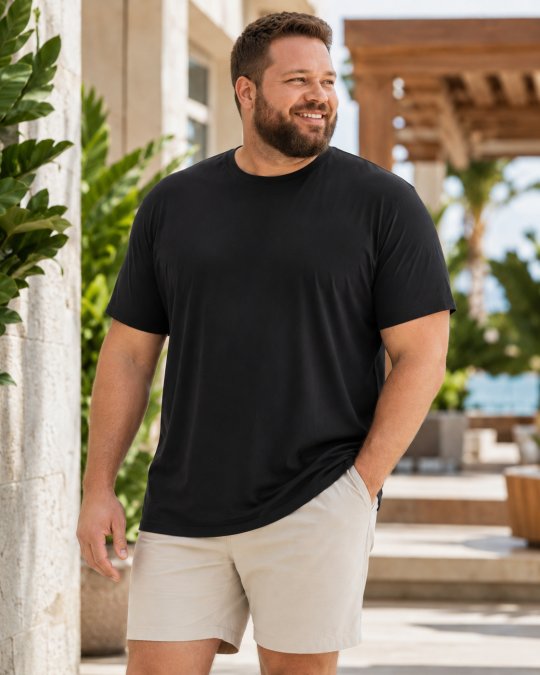
The important word is "broad." Dermatitis, eczema-prone skin, contact reactions to textile irritants, and plain old mechanical chafing all get lumped under the same phrase, yet they behave differently. One man reacts to a fragrance in his laundry detergent. Another reacts to the rough texture of a stiff cotton weave rubbing against his shoulders. A third has no true allergy at all, but his skin barrier is compromised enough that friction and trapped heat push it into irritation.
That distinction matters because it changes the fix. If the problem is a chemical additive, no fabric softness will save you. If the problem is friction and heat, the fabric is the whole game.
Why the Fabric Touching Your Skin Matters
Clothing is the largest surface your skin interacts with for the longest stretch of your day. A shirt sits against the same patches of skin for twelve or sixteen hours, moving with every shift of your shoulders. When that fabric is coarse, stiff, or holds moisture, your skin absorbs the consequences hour after hour.
Think about what that means for someone with reactive skin. Every fiber in contact becomes a small, repeated event. Softness reduces the intensity of each event. Breathability reduces how long sweat stays in contact. Neither eliminates irritation entirely, but together they change the daily arithmetic.
This is also why dermatologists tend to ask about laundry habits and clothing before they ask about exotic causes. The boring, constant inputs usually do more damage than the dramatic, occasional ones.
Softness and Reduced Mechanical Irritation
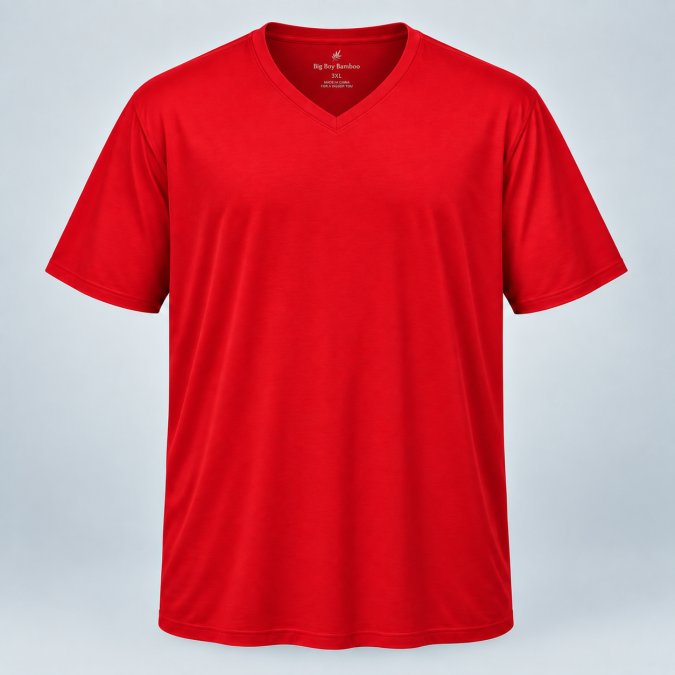
Softness is the single most underrated variable in skin comfort, and it deserves to be the center of this conversation. Mechanical irritation is the physical rubbing of fabric against skin, and it drives chafing, redness, and flares along the shoulders, collar line, and midsection.
A softer fiber structure creates less surface friction. Less friction means less abrasion. Less abrasion means the skin barrier gets a chance to recover instead of being worn down again each day.
Bamboo viscose has a smooth, rounded fiber surface, and that translates into a noticeably gentler hand feel than many standard cotton weaves. The difference isn't subtle once you wear it against bare skin all day. It is the difference between a shirt you notice and a shirt you forget.
What Bamboo Viscose Actually Is
Bamboo viscose is a regenerated cellulose fiber made from bamboo-derived cellulose through a manufacturing process that dissolves the raw plant material and reforms it into fiber. It is not the same thing as a raw bamboo stalk spun into thread, and that distinction is where a lot of misleading marketing lives.
The process matters for two reasons. First, it determines how soft and how uniform the finished fiber is. Second, it determines what, if anything, survives from the original plant.
Why Bamboo Fabric for Sensitive Skin Works: Breathability and Heat Management

Breathability is where bamboo fabric earns much of its reputation. Air moves through the fabric more readily than through a dense, tightly woven cotton, which lets heat escape instead of building up against your back and chest.
Overheating is a real problem for easily irritated skin. When your body temperature climbs under a shirt, you sweat more, the skin stays damp longer, and any existing irritation gets worse. Thermoregulation is the technical term for your body's ability to manage that heat, and a breathable fabric supports it rather than fighting it.
Here is the part most guides skip: breathability and moisture handling are separate properties. A fabric can let air through and still hold onto water. Bamboo viscose does reasonably well at both, which is why it feels cooler in practice than a comparable-weight cotton tee.
Big Men's Crew Neck Bamboo Viscose →
Is Bamboo Clothing Good for Sweating?
Bamboo clothing handles sweat well because the fiber moves moisture away from the skin and releases it to the air, a property usually described as moisture-wicking. That keeps the skin drier, reducing both sticky discomfort and the irritation damp fabric causes.
The practical relationship between perspiration and skin comfort comes down to contact time. Sweat itself is not the enemy. Sweat sitting against your skin under a non-breathing shirt for hours is. That combination softens the skin barrier, encourages microbial growth in the fabric, and turns ordinary friction into chafing.
Bamboo viscose helps on two fronts. It pulls moisture off the skin faster, and it dries faster than cotton once saturated. For a man who runs warm or works up a sweat just getting through the day, that difference shows up by evening.
Why This Matters Especially for Big & Tall Men

Larger frames simply have more surface area where fabric, skin, heat, perspiration, and movement all meet at once. Areas like the midsection, the inner arms, the back, and under the chest see more contact, more friction, and more trapped heat than they would on a smaller frame.
That is the core reason a shirt built for a big man is not the same as a shirt scaled up from a medium. Added fabric volume means more weight, more coverage, and more opportunity for heat to build. A standard tee cut for an average frame often clings through the midsection and rides up, concentrating friction exactly where it does the most damage.
Tight Clothing vs. Comfortable Drape
An excessively tight shirt increases rubbing, pressure, heat, and discomfort all at once. Every movement drags fabric across skin, seams press into the shoulders, and the fabric traps a layer of warm, damp air against your body with nowhere to go.
Seams, Collars, and Construction Matter Too
Fabric composition is not the only consideration, and anyone who has worn a beautifully soft shirt with a scratchy tag can confirm that. Construction decides where the irritation actually lands.
Bamboo vs. Cotton for Sensitive Skin
Both fibers can work well for sensitive skin, and the honest answer is that quality matters more than the category. Here is how they compare on the properties that affect reactive skin.
Property |
Bamboo Viscose |
Cotton |
|---|---|---|
Surface softness |
Very smooth, rounded fiber |
Soft, varies by weave |
Breathability |
High, air moves easily |
Moderate, depends on weave |
Moisture handling |
Wicks and dries quickly |
Absorbs, dries slowly |
Durability |
Improves when blended |
Strong on its own |
Best for |
Heat, sweat, friction |
Everyday structure and value |
Is Bamboo Fabric Hypoallergenic?
You may see bamboo clothing described as “hypoallergenic,” but that term can be a little too broad. How your skin responds to any shirt can depend on more than the fiber itself, including dyes, finishes, detergents, and individual sensitivities.
What makes bamboo viscose appealing to many people is something much easier to appreciate: its exceptionally soft, smooth feel against the skin. If you find rough or scratchy fabrics uncomfortable, a soft bamboo-viscose blend can be a comfortable option for everyday wear.
At Big Boy Bamboo, we focus on what you can actually experience when you put on the shirt: softness, comfort, and a smooth fabric that feels great against your skin.
Is Bamboo Fabric Antibacterial or Antimicrobial?
Bamboo is sometimes promoted as naturally antibacterial or antimicrobial, but those claims shouldn't automatically be applied to clothing made from bamboo viscose. Bamboo viscose is produced from bamboo-derived cellulose, which goes through significant processing before becoming the soft fiber used to make fabric.
Fortunately, a shirt doesn't need an “antibacterial” label to be comfortable. What matters more for everyday wear is how the fabric feels, how comfortably it wears throughout the day, and whether you enjoy reaching for it again and again.
That's where bamboo viscose really earns its place in the Big Boy Bamboo fabric blend. Combined with organic cotton, it helps create the soft, comfortable feel that has become one of the defining characteristics of our shirts.
Frequently Asked Questions
Is bamboo clothing ok for eczema?
Bamboo viscose can be a good option for eczema-prone skin because its smooth fiber structure creates less friction than rougher fabrics. The softness reduces mechanical irritation, and bamboo's moisture-wicking properties help keep skin drier. However, bamboo viscose is not a medical treatment for eczema. A balanced blend like 70% organic bamboo viscose and 30% organic cotton combines softness with durability, making it a practical choice for reactive skin. Always check with a dermatologist for persistent conditions.
What is the downside of bamboo fabric?
Bamboo viscose has some trade-offs. It can shrink if washed in hot water, so cold washing and low-heat drying are recommended. The manufacturing process for viscose involves chemical processing, though closed-loop methods reduce environmental impact. Some people find it wrinkles more easily than synthetic fabrics. Also, not all bamboo fabric is created equal. Quality depends on fiber structure and textile processing. A blend with organic cotton can improve wash durability while keeping the fabric soft against sensitive skin.
Is bamboo fabric hypoallergenic?
Bamboo viscose is often described as hypoallergenic, but that label requires nuance. The finished fiber is generally smooth and less likely to trigger friction-based irritation than rougher textiles. However, hypoallergenic is not a regulated term, and reactions depend on individual skin sensitivity. Chemical additives or dyes used during textile processing can cause reactions in some people. If you have known allergies, look for brands that are transparent about their manufacturing process and choose fabrics with minimal chemical treatment.
